Polyurethane Wheels About
Polyurethane Wheels
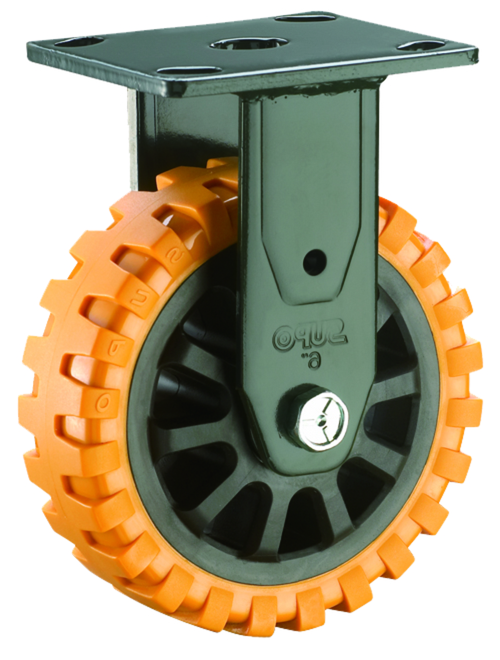
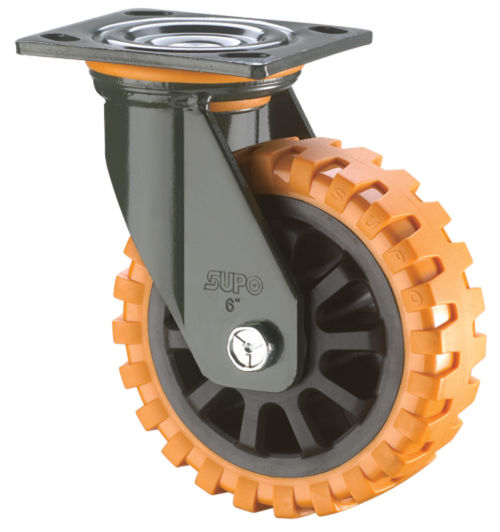
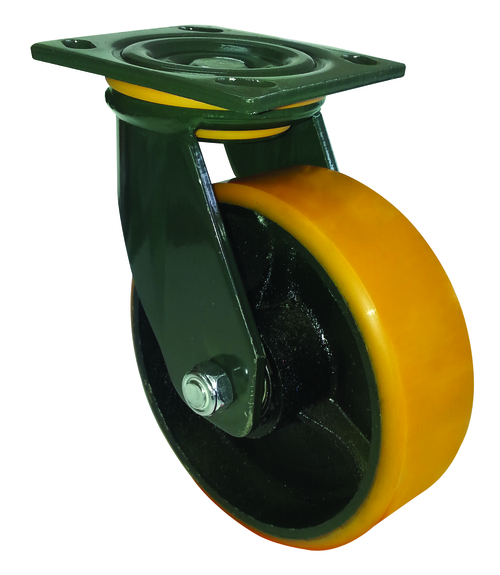
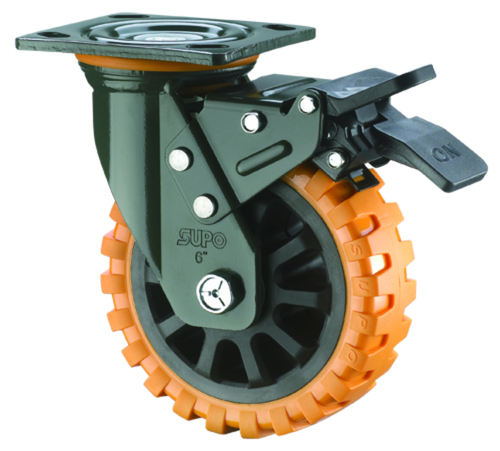
We are counted amongst the top companies involved in offering a wide range of Polyurethane Wheels. These are developed using best material and advanced technology to meet variegated preferences of our clients. These are highly acknowledged in market due to their high durability and reliability. Moreover, we assure timely delivery of our products.
Features:
- Best quality
- Reliable
- Fine finish
Specifications:
- Wheel diameter: Approx. 50 mm
-
| Wheal dia(MM) | Tread Width(MM) | Wheal material | load capacity/per pcs | loading height |
| 100 | 45 | | 235 | 143 |
| 125 | 45 | | 295 | 164 |
| 150 | 45 | Polyurethane | 350 | 190 |
| 200 | 45 | | 370 | 240 |
Robust Design for Industrial PerformanceThese polyurethane wheels are crafted with a high-strength cast iron core and double ball bearing system, ensuring reliability even under intense industrial workloads. The 90 Shore A tread hardness delivers minimal rolling resistance while handling weights up to 350 kg per wheel.
Versatile Usage Across EnvironmentsDesigned to perform in temperatures ranging from -40C to +80C, these wheels are well-suited to a variety of environments including cold storage, manufacturing floors, and material transport sectors. The red and grey polyurethane construction resists wear and tear, contributing to prolonged service life.
Flexible Mounting and Sizing OptionsAvailable in multiple diameters-25 mm to 75 mm-with a standard 50 mm width, these wheels accommodate diverse trolley and equipment designs. The standard top plate and hole spacing allow for straightforward mounting on most industrial equipment, and users can choose between brake-equipped or standard models for tailored safety control.
FAQ's of Polyurethane Wheels:
Q: How are polyurethane wheels installed on trolleys or equipment?
A: Polyurethane wheels are attached via a plate mount, which fits onto the bottom of the trolley or equipment. The standard top plate size is 100 mm x 85 mm, with pre-drilled holes spaced at 80 mm x 60 mm. Secure installation is achieved by aligning the plate and using bolts through the 12 mm diameter holes.
Q: What benefits does the 90 Shore A hardness offer in these wheels?
A: A tread hardness of 90 Shore A provides an optimal balance between load-bearing strength and shock absorption. This ensures the wheels resist deformation under heavy loads while rolling smoothly, protecting floors and extending wheel life in industrial settings.
Q: When should I choose wheels with brakes versus those without?
A: Wheels with brakes are ideal when equipment needs to remain stationary during loading, unloading, or storage. They provide extra safety by preventing unwanted movement, making them suitable for sloped surfaces or busy work environments. Non-brake wheels are best for applications requiring frequent mobility.
Q: Where can these wheels be used effectively?
A: These wheels are designed for use in trolleys, industrial equipment, and material handling systems. Their broad operating temperature range makes them suitable for warehouses, assembly lines, cold storage, and production facilities across India.
Q: What is the process for selecting the appropriate wheel size and type?
A: To select the right wheel, consider the load requirements, type of movement (swivel or fixed), mounting compatibility, and environmental conditions. Refer to the wheel sizes (25, 38, 50, or 75 mm diameter) and ensure that the wheel's top plate matches your equipment's plate mounting specifications.
Q: How does the double ball bearing system improve wheel performance?
A: The double ball bearing minimizes friction and wear, guaranteeing smooth, effortless movement even under full load capacity. This system reduces maintenance needs and enhances the wheel's operational lifespan.
Q: What is the advantage of the powder-coated finish on these wheels?
A: The powder-coated finish provides a durable surface that is resistant to corrosion, chipping, and fading. This enhances the wheel's appearance and longevity, making it suitable for tough industrial conditions.

 English
 Spanish
 French
 German
 Italian
 Chinese (Simplified)
 Japanese
 Korean
 Arabic
 Portuguese

 Send Inquiry



 Send Inquiry
 Send Inquiry
 Send SMS
 Call Me Free
